Food
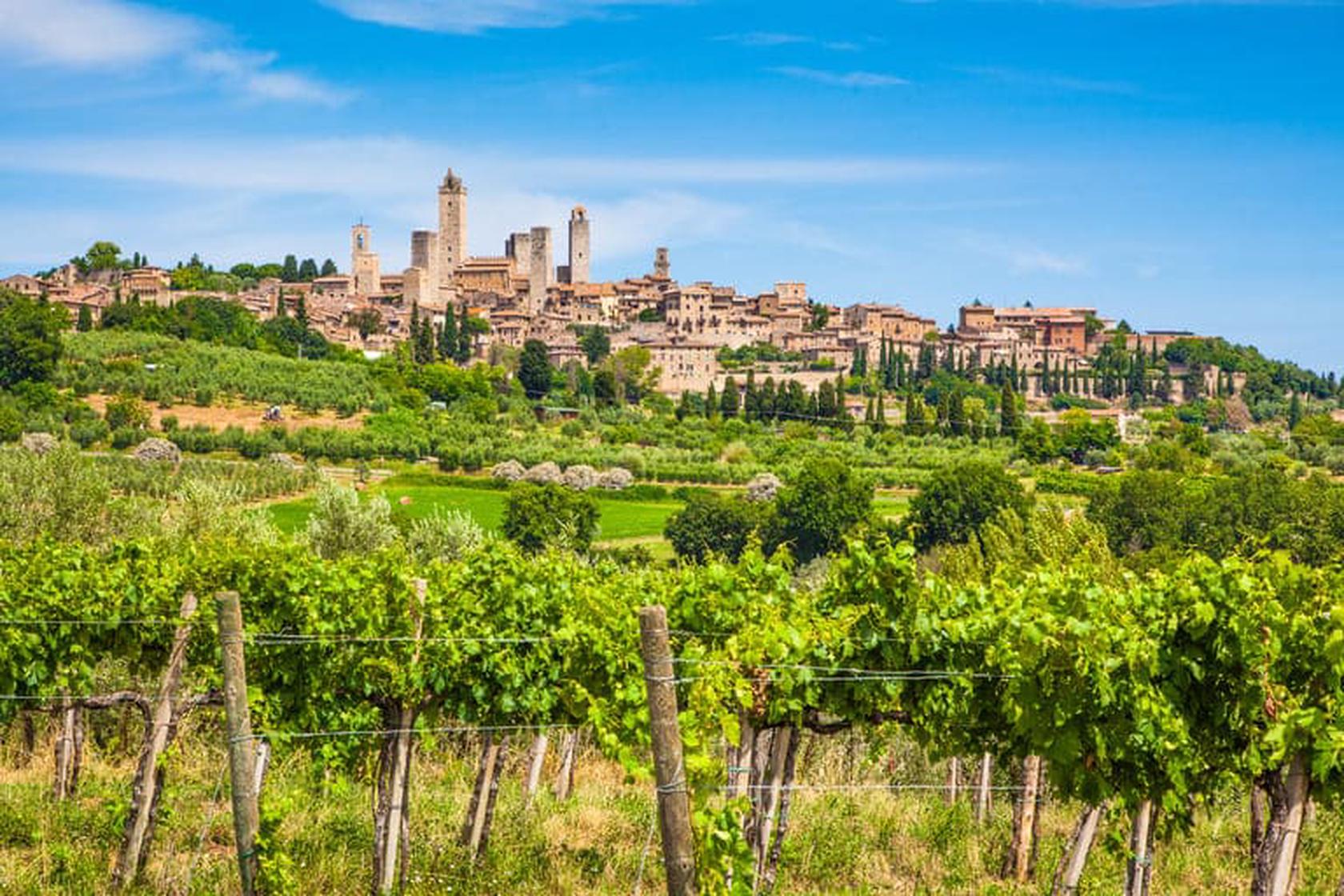
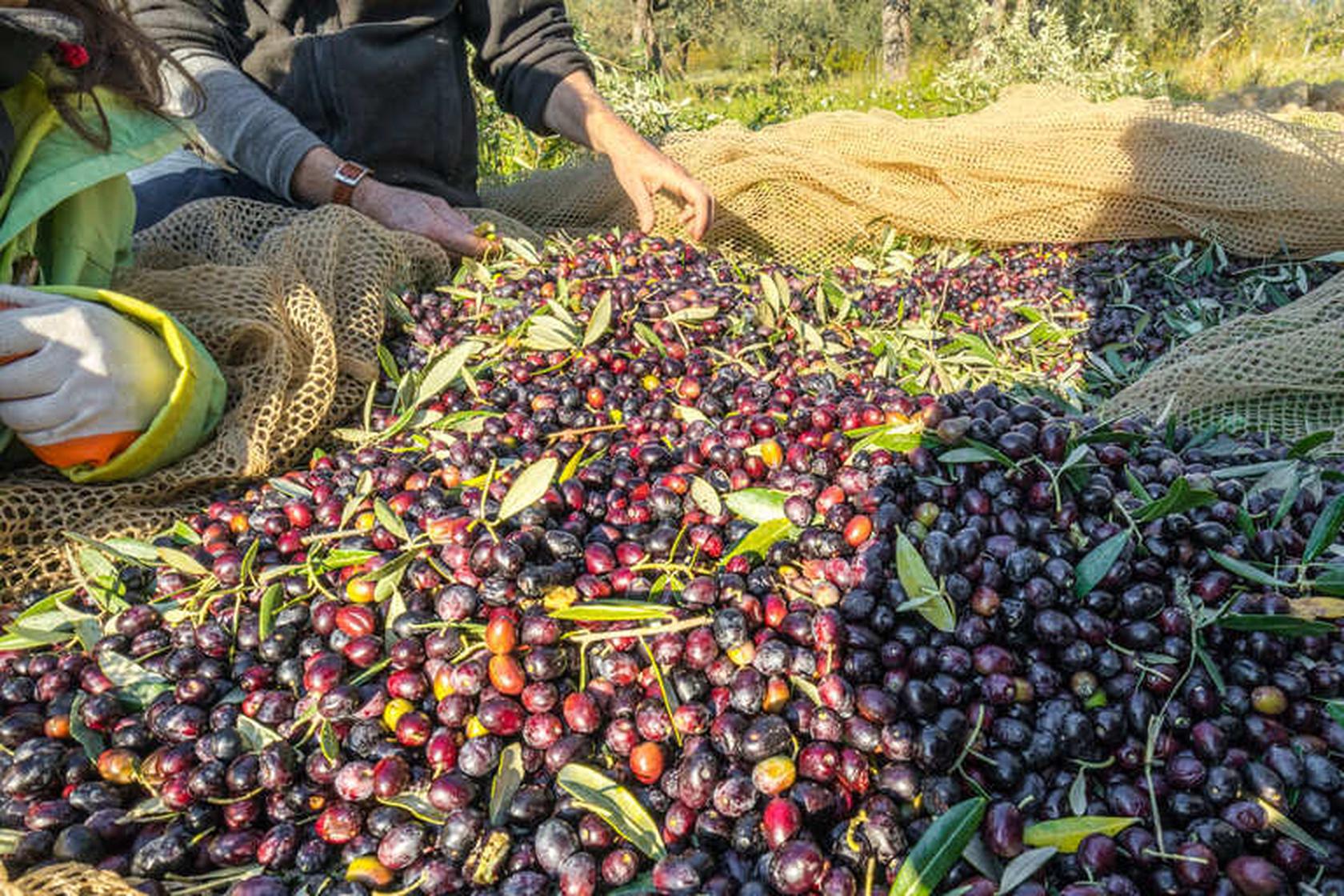
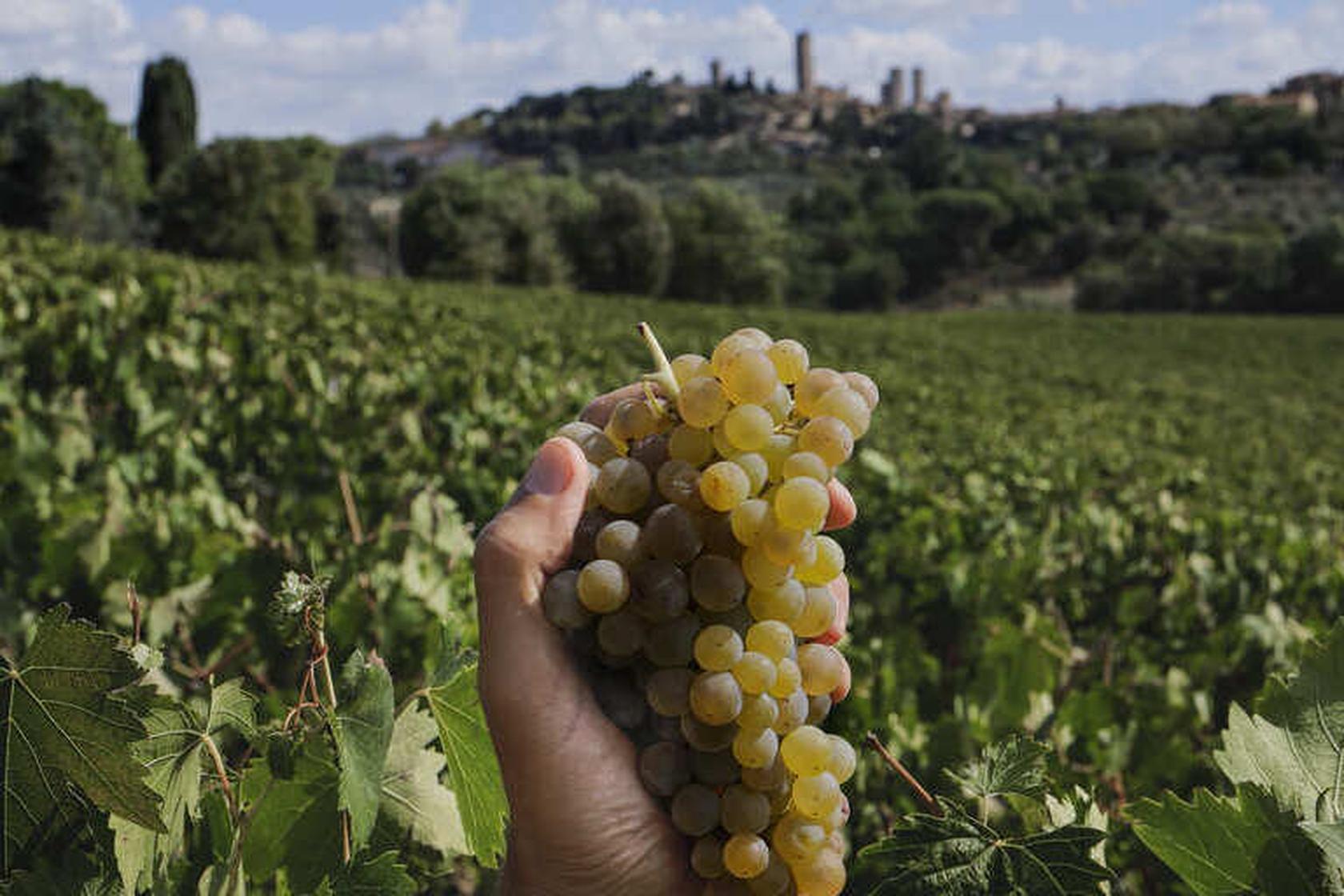
1) Extra virgin olive oil: More than 800 hectares of the San Gimignano area are dedicated to olive groves, and the most widely cultivated varieties are Moraiolo, Frantoiano, and Leccino. San Gimignano extra virgin olive oil has a harmonious flavor and a fruity aroma, characterized by hints of artichoke, thistle, freshly cut grass, and almond, mixed with bitter and spicy notes. A must-try is bruschetta, made with grilled Tuscan “sciocco” bread, salt, plenty of oil, and a dash of pureed garlic.
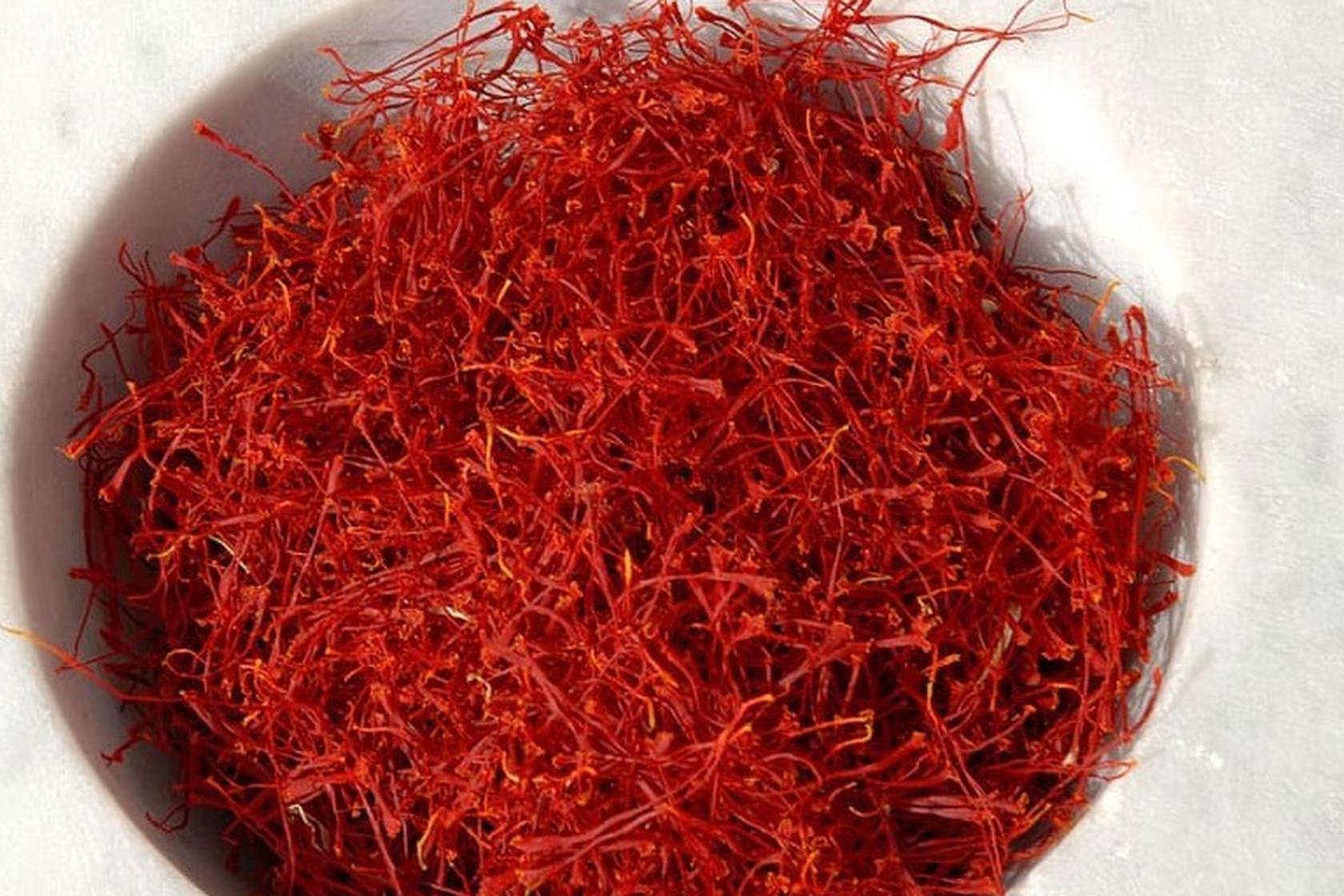
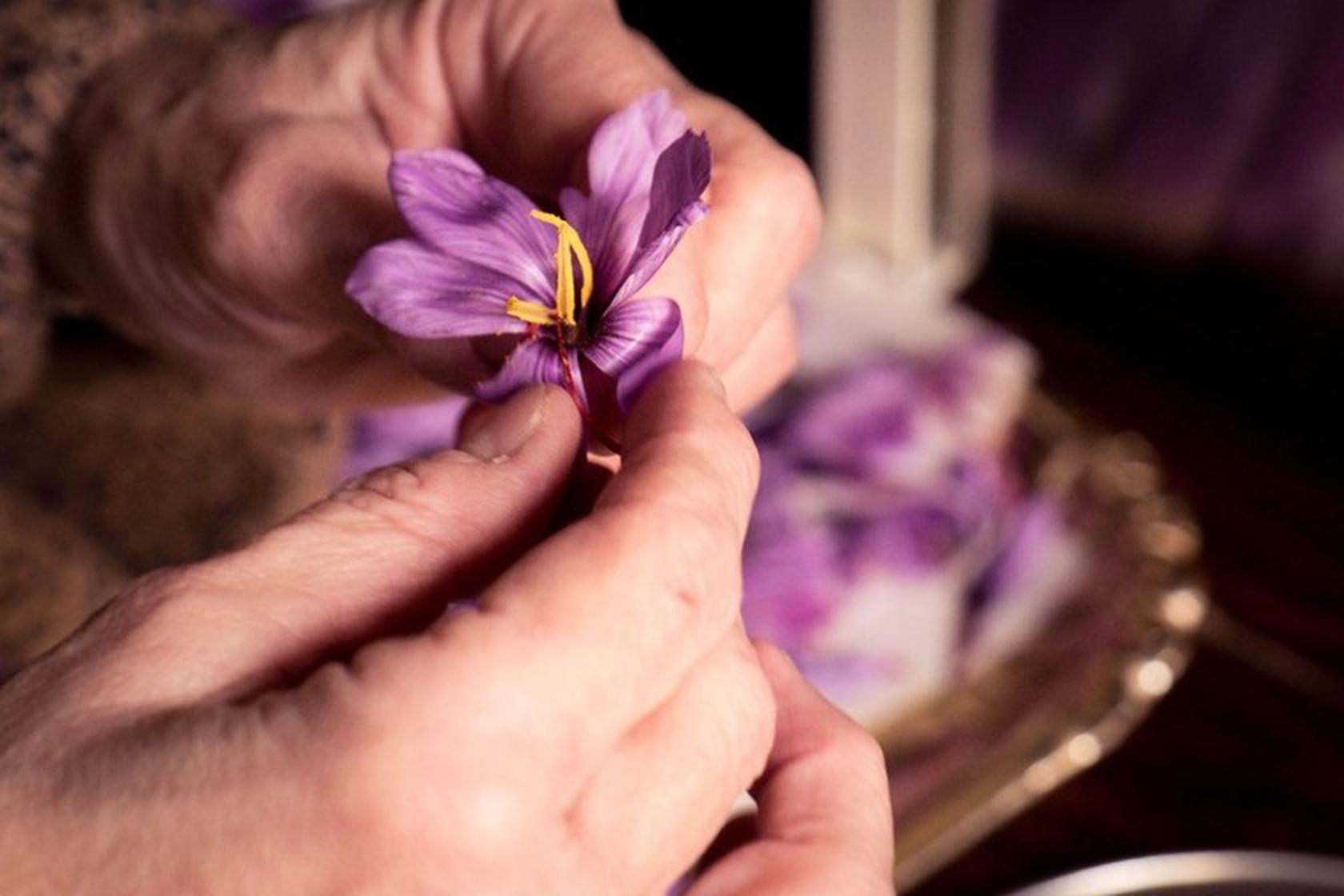
2) San Gimignano Saffron: Saffron has played a key role in the city’s economy. In 1228, the municipality, forced to pay debts incurred during the siege of the Castello della Nera, honored its obligation by using not only cash but also saffron. About fifty years later, in 1276, it introduced an export duty, similar to that for Vernaccia wine. Cultivating and harvesting saffron requires patience and care: the flowers must be picked at dawn while still closed, and the stigmas must be dried immediately. San Gimignano saffron received DOP recognition in 2005.
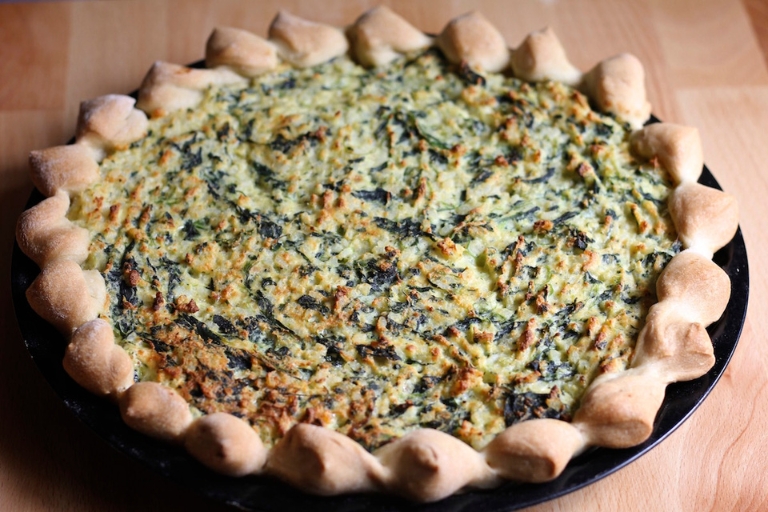
3) Featured recipes: Rabbit with Vernaccia Risotto with mascarpone, artichokes, and saffron Saffron zuccotto
Points of interest
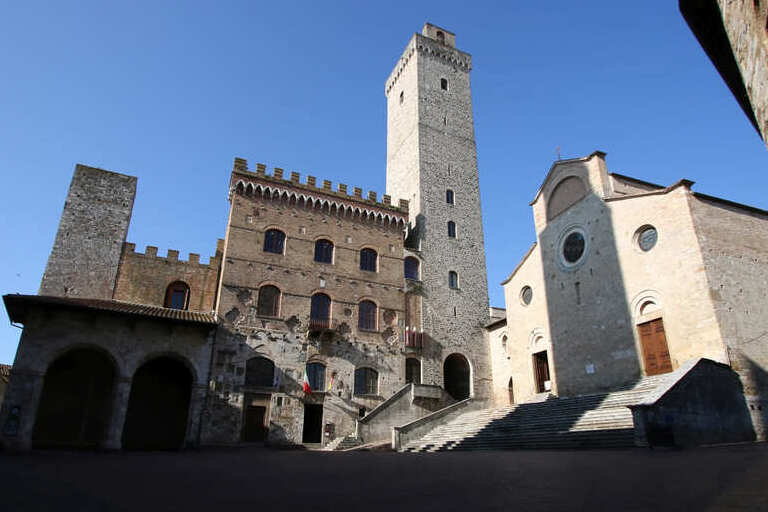
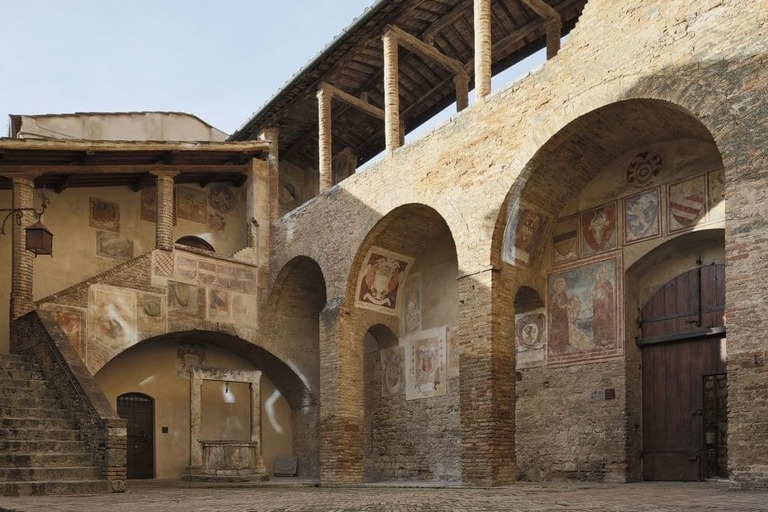
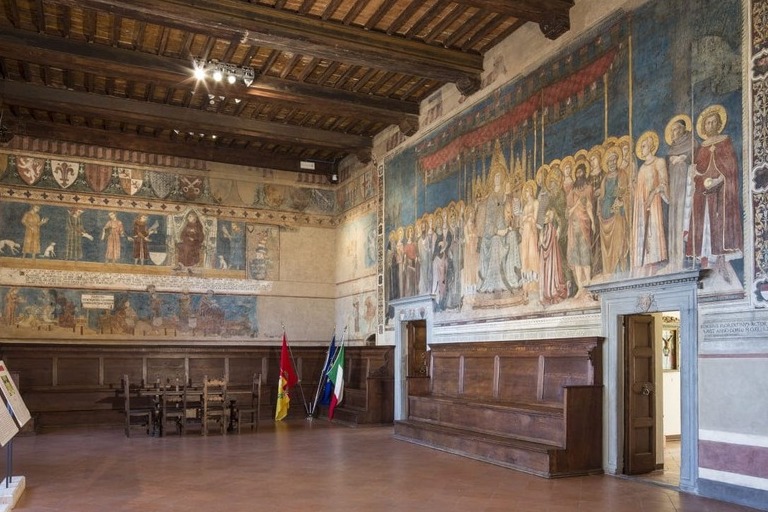
1) Palazzo Comunale: In the Piazza del Duomo, the Town Hall stands out. Built in the late 13th century over a pre-existing building, it served both as the residence of the Podestà and for meetings of the Public Council. Today, it houses the Art Gallery and the Dante Hall, where the Supreme Poet supported the Guelph cause in 1300. It preserves precious frescoes, including the Maestà by Lippo Memmi (1317), scenes from the Podestà’s chamber by Memmo di Filippuccio (14th cen-tury), and depictions of hunts and tournaments attributed to Azzo di Masetto (13th century). Info: www.sangimignano.com
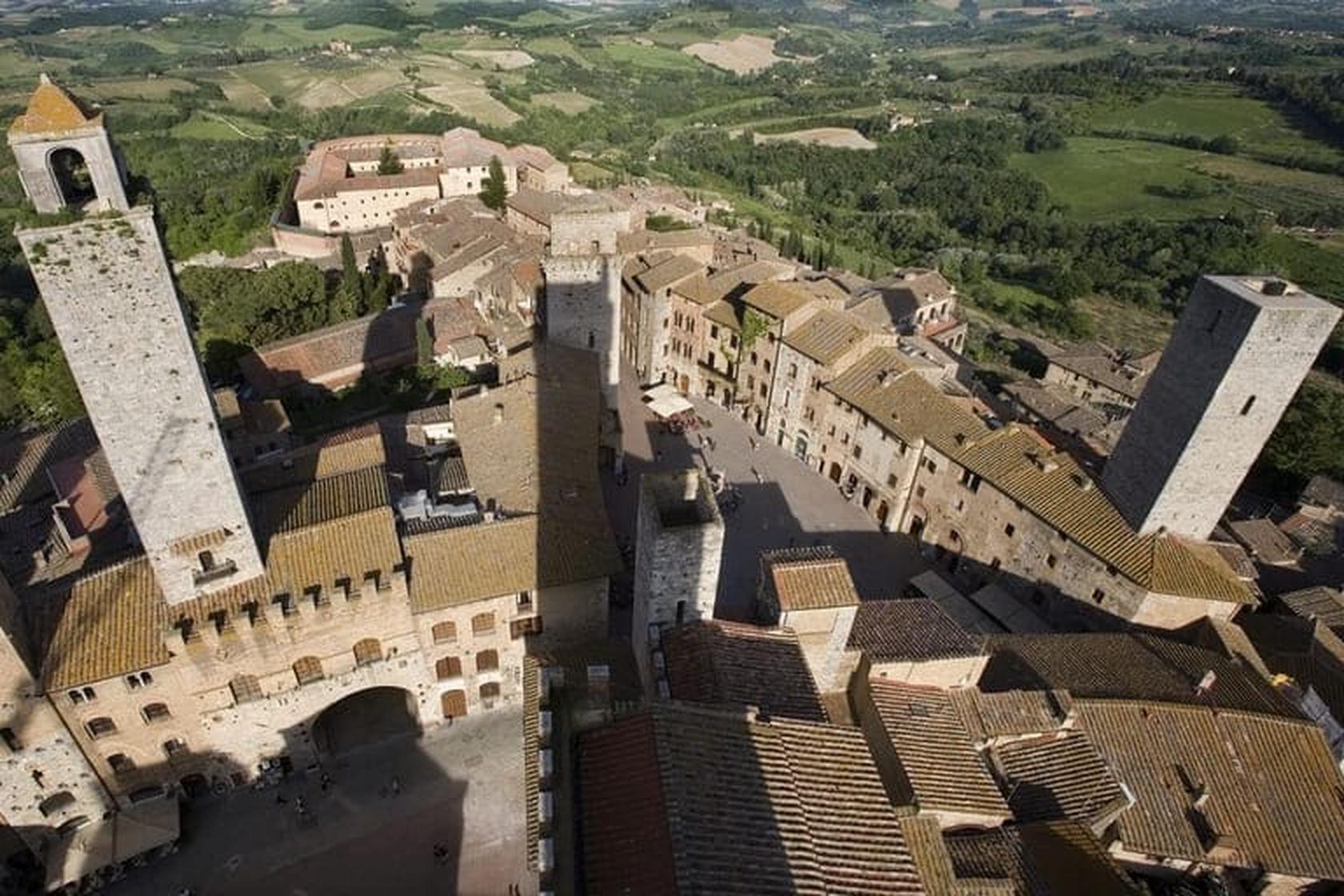
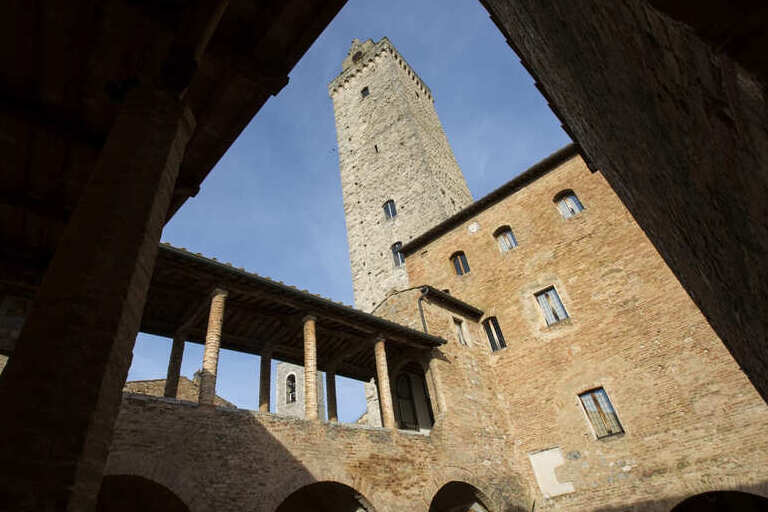
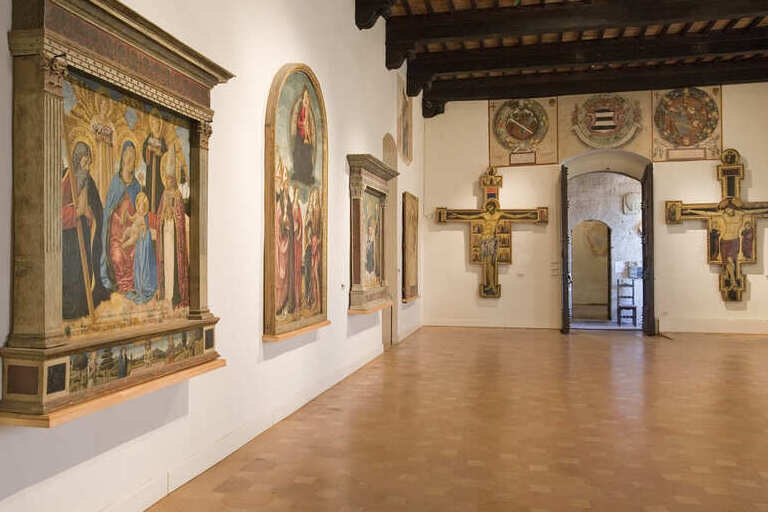
2) Pinacoteca and Torre Grossa: The Pinacoteca (Art Gallery) in the Palazzo Co-munale houses works of art from the 13th to the 17th century, tracing the evolu-tion of painting from Sienese and Florentine masters to the High Renaissance, in-cluding the altarpiece by Pinturicchio (1511). The courtyard features ancient coats of arms, a fresco by Sodoma, and the ancient bell from 1328. From here, climb the Torre Grossa, the tallest tower in San Gimignano: the summit offers a breath-taking view from the Apuan Alps to the north to Mount Amiata to the south. Info: www.sangimignanomusei.it
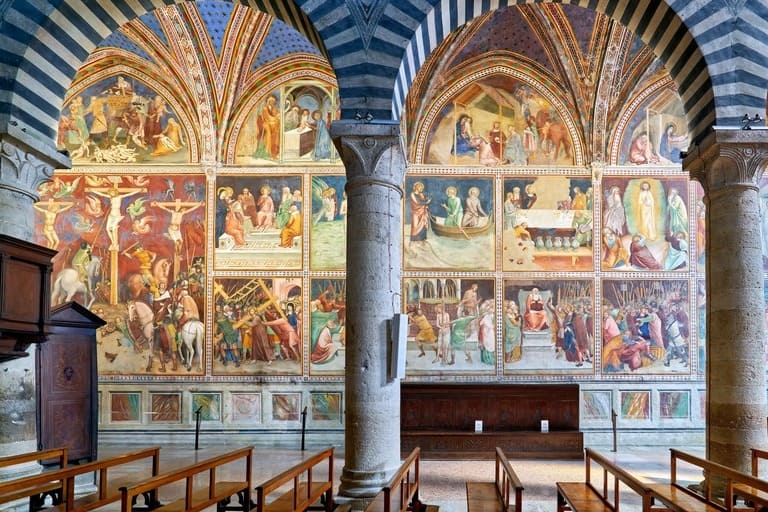
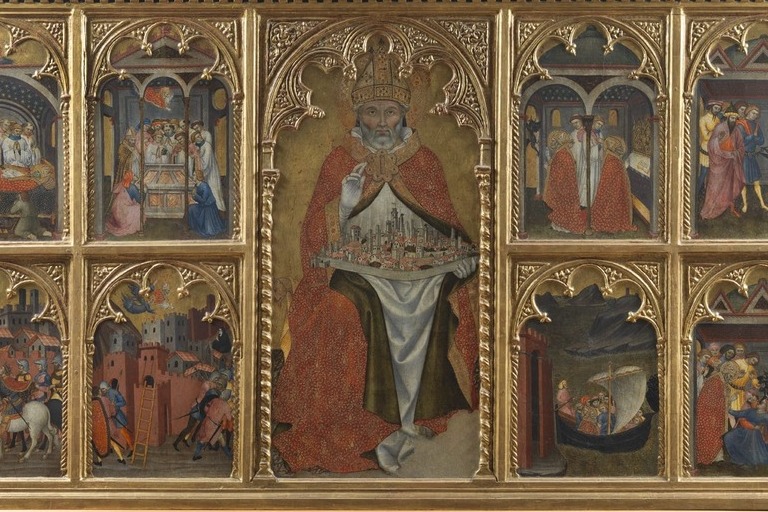
3) Basilica of Santa Maria Assunta: Of Romanesque architecture, it houses the relic of the patron saint of San Gimignano. The naves are entirely frescoed with stories from the Old and New Testaments and the Last Judgement by Taddeo di Bartolo. On the counterfaçade, the Martyrdom of Saint Sebastian, two wooden statues by Jacopo della Quercia. It contains the Chapel of Saint Fina, co-patron saint of the city, with frescoes by Domenico Ghirlandaio depicting Saint Gregory announcing his death to the Saint, and the altar by Benedetto da Maiano. Info: www.duomosangimignano.it
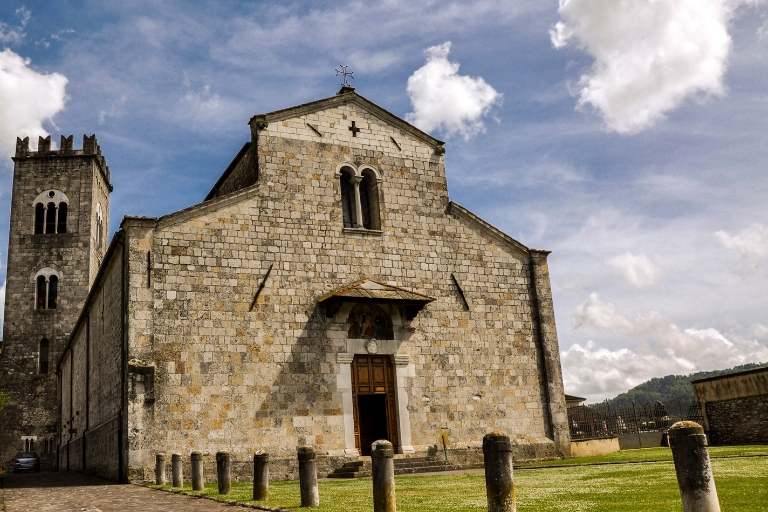
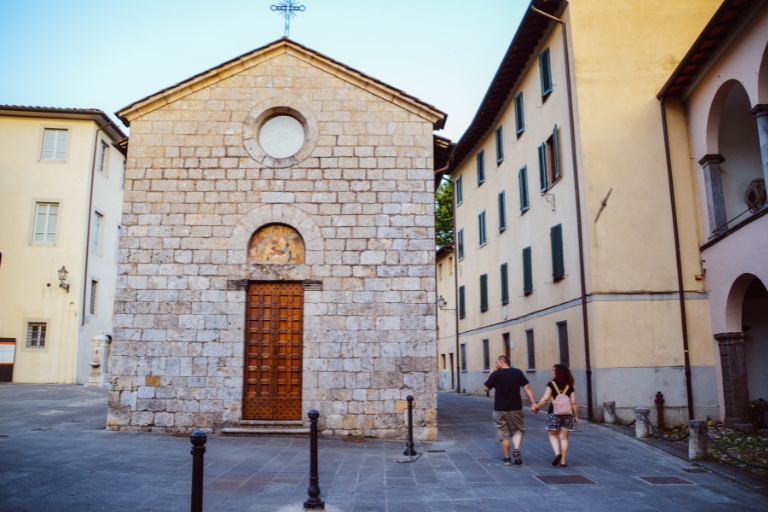
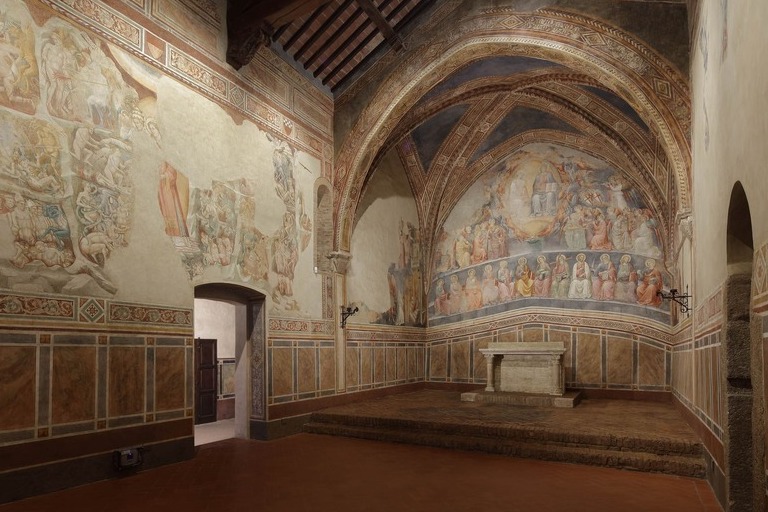
4) Church of San Lorenzo in Ponte: Near the former prison of San Domenico, now undergoing a remarkable renovation, is the Romanesque Church of San Lorenzo in Ponte, built in 1240. Its name derives from the fact that it was originally located near the drawbridge of the Bishop’s Castle. Inside, there are frescoes depicting the Stories of Saint Benedict and a large fresco depicting the Glory of Christ, the Madonna, and the Twelve Apostles, painted by Francesco di Ser Cenni around 1413.
Info: www.sangimignanomusei.it
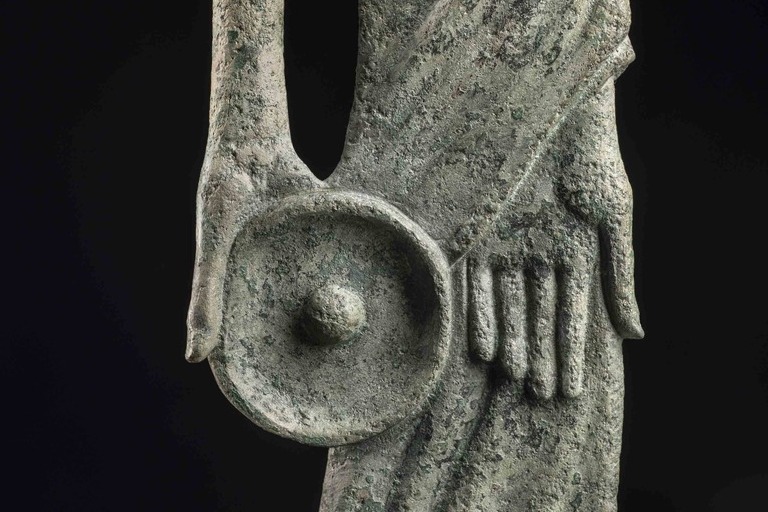
5) Santa Chiara Museum Center: The former Conservatory hosts three unique exhibits. The Archaeological and Via Francigena Museum narrates local history with Etruscan-Roman artifacts, such as the extraordinary Hinthial bronze. The Spezieria dello Spedale di Santa Fina reconstructs an ancient Tuscan pharmacy, in-cluding the shop and kitchen, preserving original aromas and vases. Finally, the “De Grada” Gallery of Modern and Contemporary Art exhibits masterpieces by 19th- and 20th-century masters, including the famous De Chirico, Carrà, and Guttuso. Info: www.sangimignanomusei.it
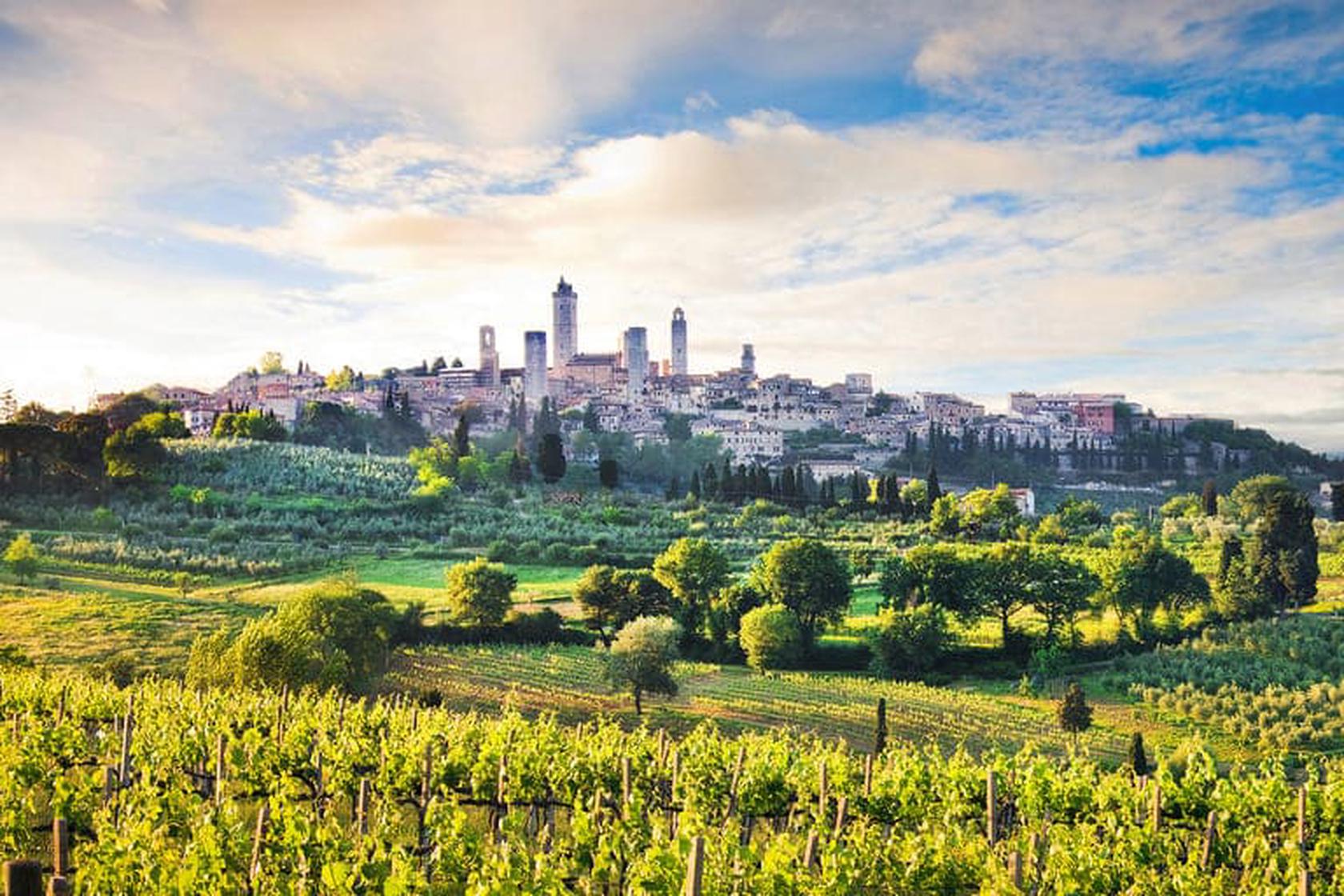
6) The Towers of San Gimignano: Of the 72 towers of San Gimignano built between 1100 and 1300, only 14 remain today. Only the most noble and wealthy could afford to build a tower next to their palace to showcase their power. With the first famines in the mid-14th century, the city’s development halted, and maintenance of the towers ceased. Subsequently, it was established that families should maintain or renovate their towers to maintain San Gimignano’s prestige. Info: www.sangimignano.com
7) Via Francigena: Stages 31-32, arriving and departing from San Gimignano, are considered among the most beautiful of the Tuscan stretch, with breathtaking landscapes and unique sights such as the Marian Sanctuary of Pancole, the village of Collemucioli, and the Romanesque parish church of Cellole, which inspired the setting for Maestro Puccini’s Suor Angelica. The city has a strong agritourism voca-tion, consistently ranking among the top ten agritourism municipalities in Italy by number of farms. Info: www.sangimignano.com
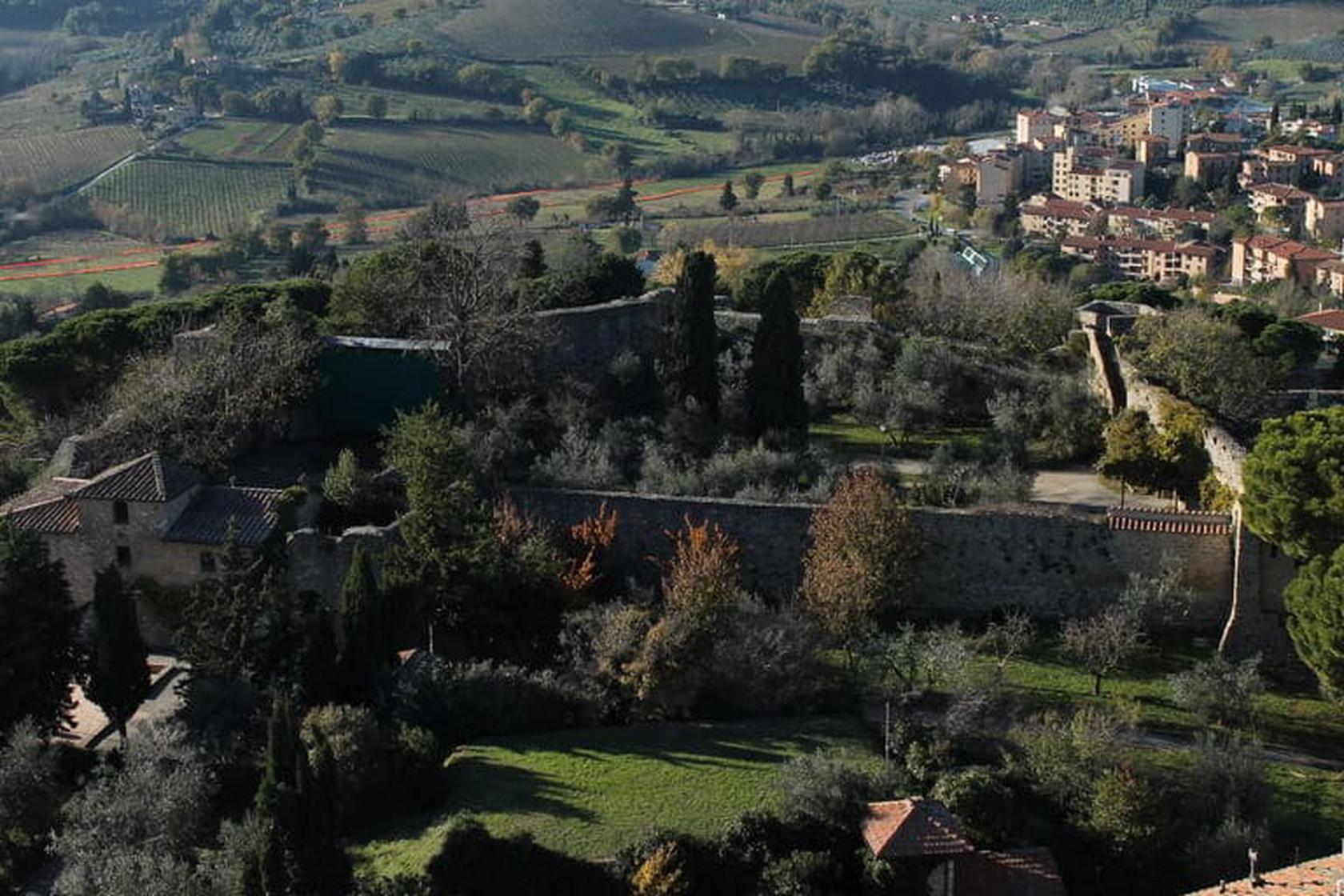
8) Walls of San Gimignano: To admire the walls that surround the historic center of San Gimignano, you can walk the perimeter of the second set of walls, dating back to the 13th century and extending for approximately 2,176 meters. The route, accessible from various points, offers extraordinary views of the Val d’Elsa and includes Medici Towers (15th-16th centuries) and the main city gates (Porta San Giovanni, Porta Quercecchio, Porta San Matteo, Porta San Jacopo, and Porta delle Fonti).
Info: www.sangimignano.com
9) San Domenico Complex: The first example of the implementation of federalism in cultural property in Italy, the San Domenico complex, a former convent and la-ter prison, now owned by the Municipality and the Region of Tuscany, constitutes approximately 10% of the area of the UNESCO historic center. Its redevelopment, thanks to a public-private investment, will transform a place of deprivation into an open space of memory and culture from 2027, with an arena for performances, a public park, and a walkway with panoramic views.
10) Montestaffoli Fortress: The fortress was built in 1353 by order of the Florenti-nes, with the aim of repelling any attacks from Siena or rebellions within the city. From the fortress’s only remaining accessible tower, you can enjoy an extraordi-nary view of the city center’s towers and a magnificent 360-degree panorama of the Val d’Elsa. Every year, on the third weekend of June, it hosts the La Giostra dei Bastoni tournament as part of the Ferie delle Messi medieval festival. Info: www.sangimignano.com